


Philippines Company Registration | Set Up a Company in the Philippines
Planning a Philippines company registration or looking to set up a company in the Philippines? Foreign investors most often form a domestic corporation, register it with the Securities and Exchange Commission (SEC), then register for tax with the Bureau of Internal Revenue (BIR) and apply for a local business permit. Under the Foreign Investments Act, foreigners can own 100% in industries not on the foreign investment negative list, but domestic-market small and medium enterprises with more than 40% foreign ownership generally need paid-in capital of US$200,000.
The Philippines has more than 110 million people, English is one of its official languages, and its BPO and outsourcing industry is mature. The CREATE Act cut corporate income tax from 30% to 25%, with 20% for small and medium domestic corporations, and VAT is 12%; the CREATE MORE Act further adjusted the economic zone and investment incentive regime. NSS Group (戰國策集團) offers one-stop Philippines company formation, from shareholding structure, SEC registration, BIR tax registration and local permits to bank account opening and annual compliance, to help you enter the Philippine market.
English is one of the official languages of the Philippines, so contracts, communication and hiring face no language barrier.
The Philippines is an RCEP member, so exporters to ASEAN and major Asia-Pacific markets can assess tariff preferences.
Industries not on the foreign investment negative list allow 100% foreign ownership; domestic-market small and medium enterprises must meet a paid-in capital threshold.
25% for most companies; 20% for domestic corporations with taxable net income of PHP 5 million or less and assets of PHP 100 million or less.
company registration?
The first draw of the Philippines is its population. It has more than 110 million people with an average age of about 25, a large and growing labor supply and fast-rising middle-class spending. It is also a global hub for business process outsourcing, with mature call center, back-office and software development industries, and English-speaking talent costs much less than in Europe or the US.
On policy, the Philippines has pushed a series of pro-business reforms in recent years. The CREATE Act and later amendments cut corporate income tax from 30% to 20% to 25%, and companies registered in PEZA economic zones can get an income tax holiday followed by preferential rates. After amendments to the Foreign Investments Act and the Retail Trade Liberalization Act, most industries are open to 100% foreign ownership, and the minimum capital for retail has been cut sharply (official notices prevail). The Philippines is also an RCEP member, with tariff preferences for exports to ASEAN and major Asia-Pacific markets.
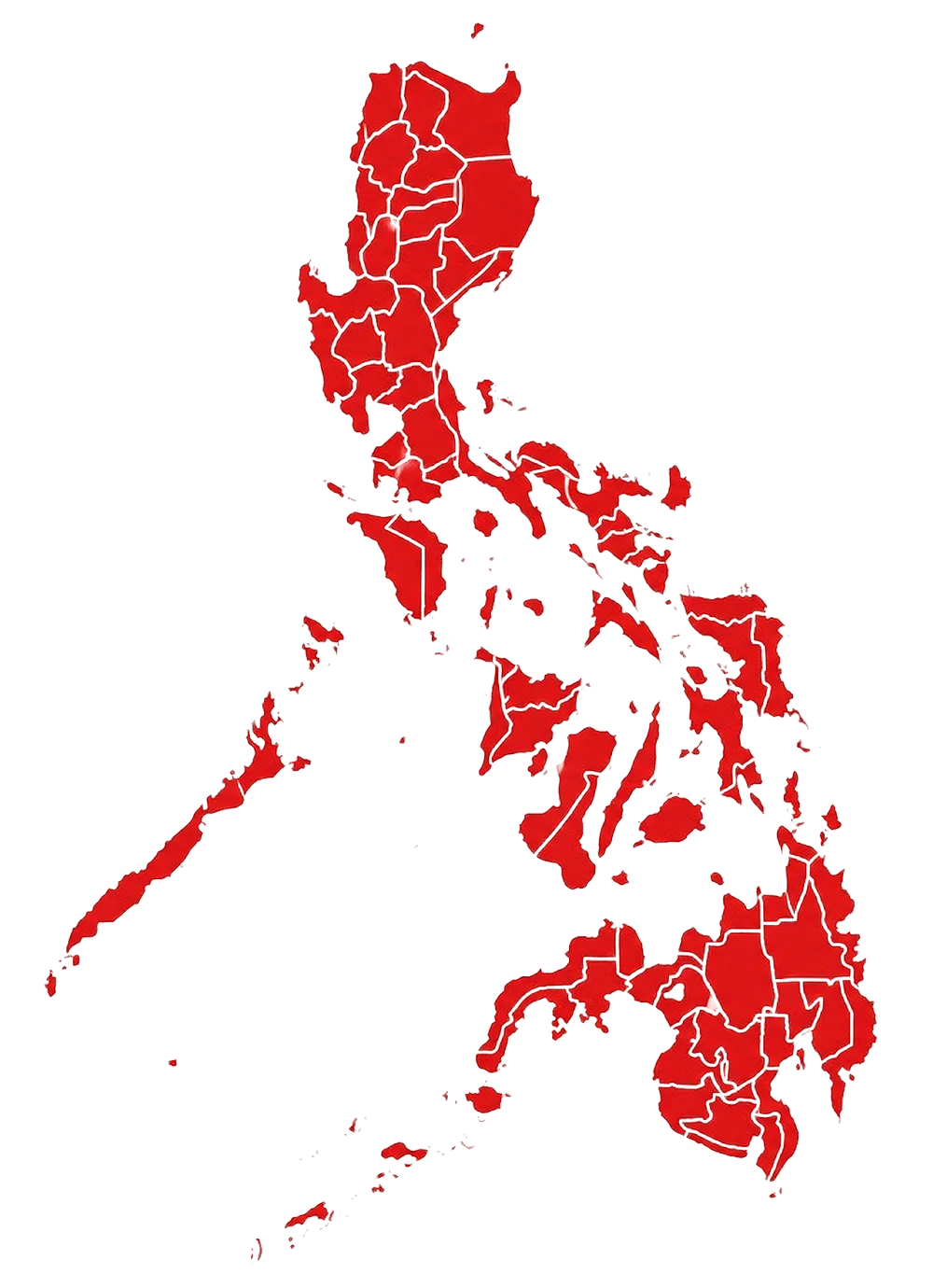
Foreign investment in the Philippines is concentrated in Luzon and Cebu, built around two main themes: outsourced services and manufacturing. Below is an investment map of the three main regions, Metro Manila, the Clark and Subic economic zones, and Cebu, with the industries that suit each.
- Areas covered
- Suitable industries
- Location advantages
- Areas covered
- Suitable industries
- Location advantages
- Areas covered
- Suitable industries
- Location advantages
- Makati and BGC: the Wall Street of the Philippines, home to banks, law firms, accounting firms and regional headquarters of multinationals; suited to holding, sales and management offices
- Quezon City and Pasay: home to large BPO parks and the easiest places to recruit for call centers, shared service centers (SSC) and IT outsourcing teams.
- Domestic consumption: with more than 13 million people in the metro area, it is the best market to test retail, e-commerce and restaurant brands in the Philippines.
Subic
- Clark Freeport Zone: a dense cluster of electronics, semiconductor assembly and testing, and aerospace companies. Companies in the zone get duty-free imports and preferential tax rates, and Clark International Airport has direct flights to Taiwan.
- Subic Bay Freeport Zone: a natural deep-water port suited to shipbuilding, heavy logistics, warehousing and transshipment, close to the Bataan and Pampanga industrial belt, with a complete supply chain.
- Cebu City: the country's second-largest BPO cluster, with mature IT parks and many universities, a steady supply of English-speaking talent and salaries about 10% to 20% below Manila.
- Lapu-Lapu City: the Mactan Economic Zone focuses on electronics and precision manufacturing near Cebu's international airport, and export-oriented manufacturers get full PEZA incentives.
Most industries are open to 100% foreign ownership, but land ownership, mass media and small-scale retail are still restricted by the Constitution and the negative list. Domestic-market foreign companies also face a minimum paid-in capital of US$200,000 (export enterprises are exempt), so confirm the shareholding structure and capital plan before you enter.
The most common form for foreign investors setting up a company in the Philippines is a domestic corporation. A single shareholder can also choose a One Person Corporation (OPC), and depending on business needs you can set up a branch office or a representative office. The core of the process is company registration with the Securities and Exchange Commission (SEC), followed by tax registration and the local business permit.
The Philippines offers plenty of business opportunities, but its foreign ownership rules, capital thresholds and two-track national and local permit system are complex for first-time foreign investors. NSS Group has served more than 30,000 businesses and, through its local professional network, supports you all the way from shareholding structure and company type to SEC registration and every permit application, so your investment lands efficiently and in compliance.

Check and reserve the company name through the SEC online system, prepare the Articles of Incorporation, By-Laws, the list of shareholders and directors and the Treasurer’s Affidavit, and file the application with the SEC. The foreign shareholding structure and capital must comply with the Foreign Investments Act and the negative list. The company is formally incorporated once the SEC issues its Certificate of Incorporation.

Register for tax with the Bureau of Internal Revenue (BIR) to get a Taxpayer Identification Number (TIN), register the books of account and apply for an Authority to Print. Only after this step can the company legally issue invoices and trade.


Open a corporate bank account and inject the paid-in capital. Domestic-market small and medium enterprises with more than 40% foreign ownership need minimum paid-in capital of US$200,000. This drops to US$100,000 for companies using advanced technology recognized by the Department of Science and Technology, recognized startups, or companies that directly employ at least 15 people, a majority of them Filipino; export enterprises are exempt. Before hiring, complete employer registration with SSS, PhilHealth and Pag-IBIG.
service

- Company name search and reservation
- Preparation and filing of registration documents
- Drafting of governing documents
- Collection of the registration certificate
- Philippines bank account opening advice
- Account opening document preparation
- Appointment booking and accompaniment
- Post-opening support
- Registered address
- Company secretary appointment
- Annual filing services
- Document custody and management
- Bookkeeping
- Tax filing and planning
- Financial statement preparation
- Audit arrangement
- Trademark search and assessment
- Trademark application filing
- Trademark maintenance and renewal
- Infringement protection advice
- Company change filings
- Share transfer support
- Company deregistration
- Legal advisory support
To help you sell, we offer a Stripe application consulting service for businesses selling internationally, so your customers can pay you easily and you can win more sales.
Good customer service is key to a successful business. We include a free AI customer service system that answers customer questions in real time and raises customer satisfaction.
A professional, attractive website is your company’s storefront online. We offer full web design services so your site looks good and works well.
Online marketing is a key part of business success today. We offer professional online marketing services, including SEO, social media marketing and content marketing.
Register your company with NSS Group company formation and receive our exclusive free one-stop AI business management system––valued at NT$360,000
One AI system to run your whole company: 12 core systems, 75+ feature modules and 15 AI tools covering the full business workflow, so a new company can start operating quickly.

- Company name search and SEC registration
- Articles of Incorporation and formation documents
- BIR tax registration support
- Local government business permit application
- Registered address service for the first year
SEC registration fees are based on authorized and subscribed capital stock; BIR and local business permit fees follow official notices. Domestic-market foreign SMEs generally need paid-in capital of US$200,000. Accounting, tax and advisory fees are quoted by structure and scope; see the cost breakdown below. No hidden fees.
How much does Philippines company registration cost? Cost breakdown
The total cost to set up a company in the Philippines is mainly made up of SEC company registration fees, BIR tax registration, local business permits and, for foreign-owned companies, the minimum paid-in capital. Government fees follow each agency's fee schedule. The items and rules below help you check Philippines company formation quotes line by line.
| Item | Cost or rule | Notes |
|---|---|---|
| SEC name reservation and company registration | Per SEC fee schedule | Fees are based on authorized and subscribed capital stock; apply through the SEC online system. |
| BIR tax registration | Per BIR rules | Get a Taxpayer Identification Number (TIN), register the books of account and apply for an Authority to Print. |
| Barangay clearance and Mayor's Permit | Per local government | Fees depend on the city and gross sales; renewed every January. |
| Paid-in capital for a domestic-market foreign company | At least US$200,000 | Applies to domestic-market small and medium enterprises with more than 40% foreign ownership; reduced to US$100,000 for companies using advanced technology, recognized startups, or companies that directly employ at least 15 people, a majority of them Filipino. |
| Export enterprise | Not subject to the threshold above | Domestic sales may not exceed 40% of total output; the Revised Corporation Code itself has no general minimum capital. |
| Accounting, tax filing and audit | Quoted by volume | File the General Information Sheet (GIS) and audited financial statements with the SEC, and file BIR returns on schedule. |
| NSS Group service fee | Written quote after a free assessment | Based on industry, shareholding structure and whether you locate in an economic zone. Every item is listed in the quote, with no hidden fees. |
Capital thresholds follow the Foreign Investments Act (RA 7042, as amended by RA 11647). For fees, the latest notices from the SEC, BIR and local governments prevail.
Philippines company tax essentials: CREATE and CREATE MORE
Philippine companies mainly pay corporate income tax and VAT. Companies in economic zones or with Board of Investments incentives also fall under the CREATE MORE incentive regime.
| Item | Rule | Notes |
|---|---|---|
| Corporate income tax (general) | 25% | Applies to domestic corporations and resident foreign corporations; the CREATE Act cut it from 30% from July 1, 2020. |
| Corporate income tax (small and medium domestic corporations) | 20% | For taxable net income of no more than PHP 5 million and total assets (excluding land used in the business) of no more than PHP 100 million. |
| VAT | 12% | Businesses whose sales reach the registration threshold must register for VAT. |
| Registered business enterprise (RBE) incentives | After the income tax holiday, choose 5% SCIT or enhanced deductions | Under CREATE MORE (RA 12066), from November 28, 2024, the rate for the enhanced deductions regime is 20%. |
| Annual obligations | SEC, BIR and local government | Annual GIS and financial statements to the SEC, periodic and annual income tax returns to the BIR, business permit renewal every January, and employer filings for SSS, PhilHealth and Pag-IBIG. |
Tax rates follow BIR and Department of Finance notices. Have an accountant assess your specific structure.
Which company type should you choose in the Philippines?
When foreigners set up a company in the Philippines, they usually compare a domestic corporation, a One Person Corporation, a branch office and a representative office.
| Item | Domestic corporation | One Person Corporation (OPC) | Branch office | Representative office |
|---|---|---|---|---|
| Legal status | Separate legal entity | Separate legal entity with only 1 shareholder | Extension of the foreign company, not a separate legal entity | May not earn income |
| Foreign ownership | Per the negative list; 100% in most industries | Per the negative list | Fully funded by the foreign parent | Operations funded by the foreign parent |
| Main registration | SEC registration + BIR + local permits | SEC registration + BIR + local permits | SEC license to do business as a foreign corporation | SEC registration |
| Best for | Most common for manufacturing, trading and BPO | Single shareholder, simple structure | Parent company operating and taking orders directly in the Philippines | Market research, liaison and promotion |
These are general principles. Base your choice on industry, ownership percentage and business model.
What foreign founders should know about setting up a company in the Philippines
- Check the negative list first: foreign ownership is still restricted for land ownership, mass media and some public utilities, and some industries cap foreign ownership at 40%. Confirm this before filing.
- Capital threshold for domestic-market foreign companies: domestic-market small and medium enterprises with more than 40% foreign ownership generally need paid-in capital of US$200,000, reduced to US$100,000 if they meet the legal conditions.
- Two-track national and local permits: after SEC registration you still need BIR tax registration and an Authority to Print, a Barangay clearance and a Mayor's Permit. Local permits are renewed every January.
- Economic zone planning: locating in an economic zone such as PEZA or applying for Board of Investments (BOI) incentives brings the CREATE MORE income tax holiday, 5% SCIT or enhanced deductions. Plan this before you set up.
- Home-country tax: check whether your home country has a double taxation agreement with the Philippines and how its controlled foreign company (CFC) rules apply. Philippine corporate income tax of 25% (or 20%) is often above low-tax thresholds, but companies with incentives such as the 5% SCIT should be assessed case by case.
- Outbound investment reporting: check whether your home country requires approval or reporting for investment in a Philippine company, and keep contracts and records for funds sent in and out.
Further reading
Sources: Official Gazette: RA 11647 amending the Foreign Investments Act; RA 7042 Foreign Investments Act; Philippine Board of Investments (BOI): 2025 cost of doing business and capital requirements; BIR RMC 89-2021: CREATE corporate tax rates; BIR RR 7-2025: CREATE MORE implementing rules; RA 12066 CREATE MORE; Philippine Securities and Exchange Commission (SEC). The latest official notices prevail. This page is general information, not legal or tax advice.
Can foreigners own 100% of a company registered in the Philippines?
In most industries, yes.
Under the Foreign Investments Act, foreign investors can own 100% of a company as long as the industry is not on the foreign investment negative list. Common industries such as trading, manufacturing, BPO, software development and food and beverage are open. The main restrictions remain on land ownership, mass media and some public utilities. Before we start, we confirm the ownership cap for your target industry and plan the most suitable shareholding structure.
Can the US$200,000 minimum capital for a domestic-market foreign company be reduced?
Yes, if you meet certain conditions.
If the company uses advanced technology recognized by the Department of Science and Technology (DOST), is recognized by the authorities as a startup or startup enabler, or directly employs at least 15 people, a majority of them Filipino, the minimum paid-in capital drops to US$100,000. An export enterprise (domestic sales no more than 40% of total output) is not subject to the US$200,000 threshold, and the Revised Corporation Code sets no general minimum capital. We help you choose the most favorable positioning for your business model.
How long does it take to register a company in the Philippines?
The overall timeline depends on SEC company registration, BIR tax registration, local business permits and bank account opening. It takes longer if the business is on the negative list or needs economic zone registration or a special license. Once we receive your complete documents, we give you an actual timeline and report progress regularly.
Do I need to be in the Philippines in person to register a company?
What taxes does a Philippine company pay, and what incentives are available?
The corporate income tax for a typical domestic corporation is 25%. Domestic corporations with taxable net income of PHP 5 million or less and total assets (excluding land used in the business) of no more than PHP 100 million pay 20%. VAT is 12%. Companies in PEZA economic zones or with BOI investment incentives can get an income tax holiday under CREATE MORE, and afterward choose the 5% special corporate income tax or the enhanced deductions regime (20% tax rate). Our tax specialists provide full calculations and planning for your business model.
Who can help me register a company in the Philippines?
NSS Group (go.ai.com.tw) can help. We handle setup from shareholding structure, SEC registration, BIR tax registration and local permits to bank account opening, and provide full ongoing support, including the January business permit renewal, SEC annual filings (GIS and financial statements), bookkeeping and BIR tax filings, employer filings for SSS and the other two employee insurance schemes, company change filings, trademark registration and legal advice. Our team reminds you of each compliance deadline so you can focus on growing your business.