


India Company Registration | Set Up a Private Limited Company in India
Planning India company registration, or want to set up a company in India? The entity foreign companies most often set up in India is the private limited company, applied for online through SPICe+ of the Ministry of Corporate Affairs (MCA). In most industries, foreign investors can own 100% under the automatic route, but the company needs at least 2 directors, and 1 of them must have stayed in India for at least 182 days.
A company with authorized capital of up to INR 1.5 million pays no MCA filing fee for SPICe+ incorporation, only state stamp duty. Domestic companies that choose the concessional regime pay 22% corporate income tax, or 25% or 30% under the normal regime, and GST has two rates, 5% and 18%. India has a large consumer population, a fast-growing middle class and a mature tech talent supply chain. NSS Group (戰國策集團) provides a one-stop India company formation service, from FDI structure assessment, DSC and DIN, SPICe+ incorporation, PAN, TAN and GST registration and bank account opening to annual compliance, helping foreign companies establish themselves in India.
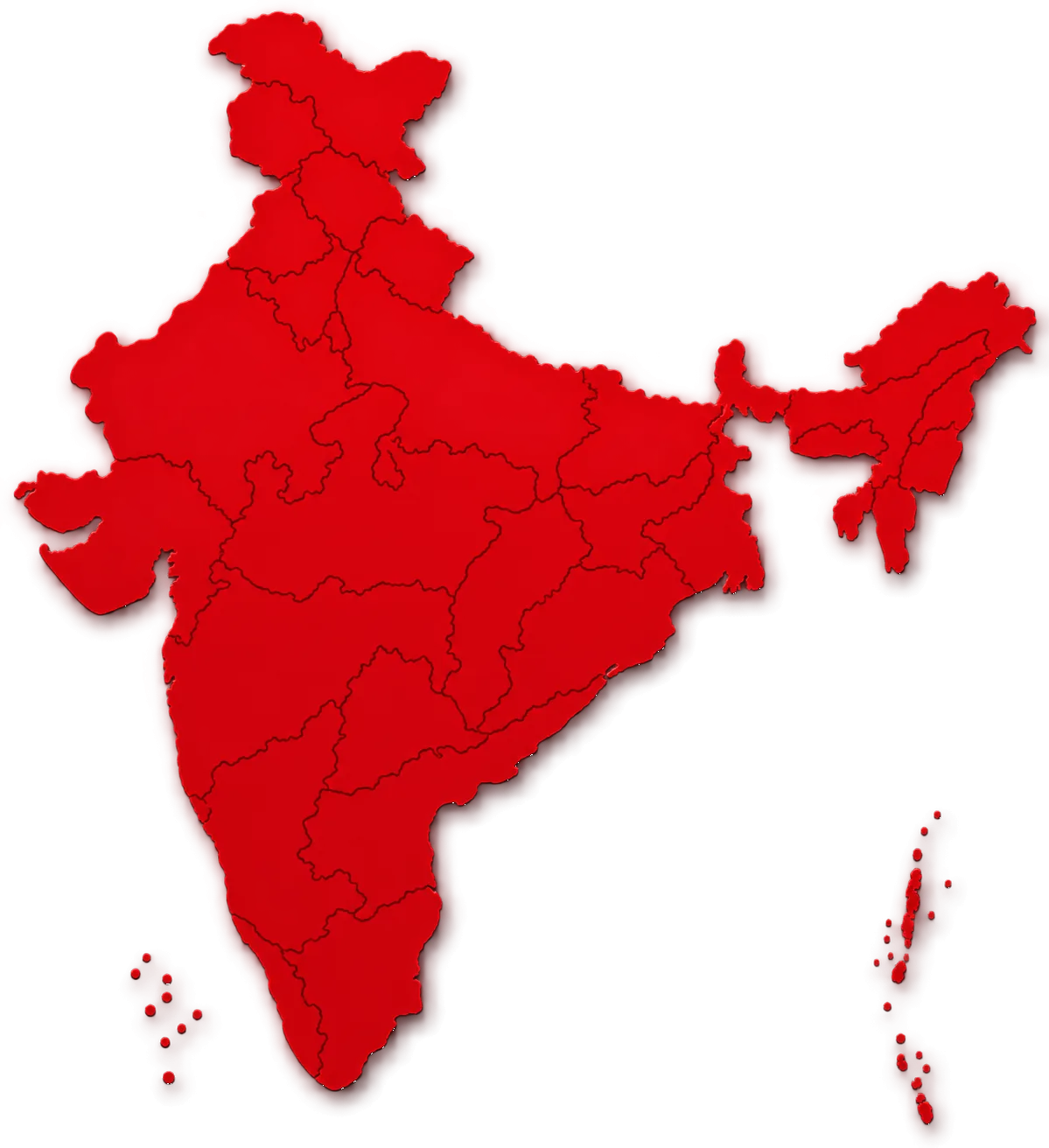
A fast-growing middle class creates large opportunities for e-commerce, tech, consumer brands, fintech, education, healthcare and professional services.
India’s role keeps growing in electronics manufacturing, auto parts, pharmaceuticals, software and tech services.
A large pool of engineers, software developers, IT and professional services talent, well suited to building R&D, technical support and operations teams.
Most industries allow foreign direct investment, some through the Automatic Route, but you still need an FDI compliance assessment first.
India is more than a country with a large population. It is becoming a key strategic base as global companies rethink their markets, talent and supply chains. For foreign companies, setting up a company in India gives you a local base for receiving and making payments, hiring, selling services and working with supply chain partners.
The real question is not whether to go to India, but what structure your Indian company should use to enter the market. NSS Group helps you plan before setup, reducing the risk of finding out after incorporation that the structure does not fit how you actually operate.
India is a vast market. Choose a city for your entity based on your industry, talent needs, customer base and supply chain. The three strategic regions below, North, West and South India, help you make an initial call on where to set up and operate.
- Areas covered
- Suitable industries
- Location advantages
- Areas covered
- Suitable industries
- Location advantages
- Areas covered
- Suitable industries
- Location advantages
India
- Delhi NCR: covers New Delhi, Gurugram and Noida. Suits an India headquarters, sales office, R&D center or project management team.
- Gurugram: dense with finance, tech, BPO and multinational service centers, with mature business infrastructure. Suits foreign companies setting up and hiring professionals.
- Noida: electronics manufacturing, IT services and industrial parks are growing fast. Suits tech, e-commerce, software and light manufacturing.
India
- Mumbai: India's financial and commercial center. Suits holding companies, financial services, trading, brand operations and cross-border payment management.
- Pune: complete clusters for automotive, industrial manufacturing, engineering R&D and IT services. Suits manufacturers and technology service companies.
India
- Bengaluru: India's tech and startup hub. Suits software development, AI, SaaS, R&D centers and global technical support teams.
- Hyderabad / Chennai: between them, strengths in IT, pharmaceuticals, automotive, electronics and port logistics. Suits services, manufacturing and export-oriented companies.
India continues to open up to foreign investment, but FDI caps and the choice between the automatic and government approval routes still vary by industry. Before you set up, confirm the shareholders’ nationality, investment flows and business activities.
India’s tax system stresses filing deadlines and transaction records. After setup, a company usually deals with income tax, GST, TDS, ROC/MCA annual filings, audit and bookkeeping, so plan the compliance calendar early.
Indian banks review foreign shareholders, director backgrounds, source of funds and the actual business plan closely. If the account documents and KYC explanations are not prepared in advance, the start of operations may be delayed.
When a foreign investor sets up a company in India, India company registration is only part of the work. You also need to confirm the FDI policy, the shareholding and director arrangements (at least 1 resident director), the capital remittance and bank KYC, followed by PAN, TAN, GST, accounting and tax, and foreign investment reporting. NSS Group supports you from the structure assessment through setup, account opening and ongoing compliance.

Confirm whether your business activities are open to foreign direct investment, and whether the Automatic Route applies or government approval is needed. At the same time, assess the foreign shareholding percentage, shareholder structure, directors, investment amount and fund flows.

Prepare the company name and the shareholder, director and identity documents required for Indian company registration. Directors must first obtain a digital signature certificate (DSC). Documents of foreign shareholders or overseas corporate shareholders must be notarized and legalized. For countries outside the Hague Apostille Convention, this usually means notarization, legalization by the foreign ministry and attestation by the Indian mission, so confirm the checklist in advance.

File through the SPICe+ integrated form of the Ministry of Corporate Affairs (MCA). Part A reserves the company name. Part B submits the incorporation application and the memorandum and articles of association, and also obtains the directors’ DIN, the company PAN and TAN, EPFO and ESIC registration, and a bank account. Companies with authorized capital of up to INR 1.5 million pay no MCA filing fee, only state stamp duty.

After incorporation, we help plan bank account opening, the capital remittance, share issue and foreign investment reporting (FEMA). We also assess GST registration based on turnover (thresholds of INR 4 million for goods and INR 2 million for services), TDS withholding, bookkeeping, the annual audit and MCA annual filings.

- Company name search and reservation
- Preparation and filing of registration documents
- Drafting of governing documents
- Collection of the registration certificate
- Choosing an Indian bank
- Account opening document preparation
- Appointment booking and accompaniment
- Post-opening support
- Bookkeeping
- Tax filing and planning
- Financial statement preparation
- Audit arrangement
- Registered address
- Company secretary appointment
- Annual filing services
- Document custody and management
- Company change filings
- Share transfer support
- Company deregistration
- Legal advisory support
- Trademark search and assessment
- Trademark application filing
- Trademark maintenance and renewal
- Infringement protection advice
To help you sell, we offer a Stripe application consulting service for businesses selling internationally, so your customers can pay you easily and you can win more sales.
Good customer service is key to a successful business. We include a free AI customer service system that answers customer questions in real time and raises customer satisfaction.
A professional, attractive website is your company’s storefront online. We offer full web design services so your site looks good and works well.
Online marketing is a key part of business success today. We offer professional online marketing services, including SEO, social media marketing and content marketing.
Register your company with NSS Group company formation and receive our exclusive free one-stop AI business management system––valued at NT$360,000
One AI system to run your whole company: 12 core systems, 75+ feature modules and 15 AI tools covering the full business workflow, so a new company can start operating quickly.

- Company name search and registration
- Preparation and filing of registration documents
- Drafting of governing documents
- Registration certificate and company documents
- Registered address service for the first year
The actual cost depends on the company type, share capital structure and any extra services. We give transparent quotes with no hidden fees.
MCA government fees are extra: SPICe+ incorporation with authorized capital of up to INR 1.5 million has no filing fee, only state stamp duty. Above that, fees are based on authorized capital bands. See the fee breakdown below.
India company formation cost: MCA government fee breakdown
An Indian private limited company applies online through the SPICe+ integrated form of the Ministry of Corporate Affairs (MCA), which handles name reservation, incorporation, the Director Identification Number (DIN), PAN and TAN in one filing. The government fee items are listed below so you can check each line when you compare quotes.
| Item | Government fee | Notes |
|---|---|---|
| SPICe+ incorporation (authorized capital up to INR 1.5 million) | No MCA filing fee | Only the stamp duty set by each state is payable |
| SPICe+ incorporation (authorized capital above INR 1.5 million) | Based on authorized capital bands | The form fee, registration fees for the memorandum and articles of association, and stamp duty are combined in one payment challan |
| Name reservation (SPICe+ Part A) | Per the MCA fee schedule | Can be filed together with the Part B incorporation application |
| DIN, PAN, TAN, EPFO, ESIC and bank account | Applied for together through SPICe+ Part B | No extra MCA fee for opening a bank account through SPICe+ |
| Directors' digital signature certificates (DSC) | Issued by certifying authorities approved in India; fees vary by authority | |
| Document notarization and legalization, company secretary, accounting and agent services | Quoted case by case; NSS Group gives a written quote after a free assessment | |
Based on the MCA SPICe+ FAQs and form instructions, checked in October 2026. Stamp duty varies by the state where the company is registered. The latest official notices prevail.
India company tax essentials: corporate income tax and GST
An Indian company files corporate income tax with the Income Tax Department, and must register for Goods and Services Tax (GST) once its sales of goods or services reach the threshold. The new Income-tax Act, 2025 applies from April 1, 2026, with tax rates unchanged.
| Item | Rule | Notes |
|---|---|---|
| Domestic company (concessional regime) | 22% | Available to companies that give up certain deductions and incentives. Surcharge is fixed at 10%, plus 4% health and education cess. |
| Domestic company (normal regime, turnover up to INR 4 billion) | 25% | Applies where turnover in the specified year does not exceed INR 4 billion (400 crore). |
| Domestic company (other) | 30% | Surcharge under the normal regime: 7% on income above INR 10 million, 12% above INR 100 million. |
| New manufacturing company | 15% | The concession for certain new manufacturing companies under former section 115BAB of the Income-tax Act, subject to conditions such as deadlines for incorporation and starting manufacturing. |
| Foreign company (branch) | 35% | Applies to the general income of companies that are not domestic companies. |
| GST rates | 5%, 18%, and 40% on certain goods | The 56th GST Council meeting in September 2025 moved to two rate slabs and removed the 12% and 28% rates. |
| GST registration threshold | INR 4 million for goods, INR 2 million for services | Lower in some special category states. Interstate suppliers and sellers on e-commerce platforms generally must register regardless of turnover. |
| Annual filings | MCA and Income Tax Department | File financial statements (AOC-4) and the annual return (MGT-7/MGT-7A) with the MCA, and file the corporate income tax return. Company accounts must be audited by a chartered accountant. |
Rates are based on notices from the Income Tax Department and the GST Council. Ask an Indian chartered accountant to assess your structure.
Private limited company, LLP or branch? Entity comparison
When foreign investors set up a company in India, they most often compare a private limited company, a limited liability partnership (LLP) and an Indian branch of the foreign company.
| Item | Private limited company | Limited liability partnership (LLP) | Branch of a foreign company |
|---|---|---|---|
| Legal status | Separate legal entity; shareholders have limited liability | Separate legal entity; partners have limited liability | Not a separate legal entity; the parent company is liable |
| Minimum members | At least 2 directors and 2 shareholders; 1 director must stay in India for at least 182 days | At least 2 designated partners; 1 must be resident in India | Approval from the Reserve Bank of India required |
| Foreign investment | 100% foreign ownership under the automatic route in most industries | Only in sectors open to 100% automatic route investment with no added conditions | Business scope restricted by the Reserve Bank of India |
| Corporate income tax | 22% / 25% / 30% | Taxed under partnership rules | 35% |
| Best suited to | Subsidiaries, R&D centers, local operations and fundraising | Professional services, small joint ventures | Specific activities run directly by the parent company in India |
These are general principles. Confirm LLP and branch rules against the latest MCA and Reserve Bank of India notices.
What foreign founders should know about setting up a company in India
- At least 1 director must be resident in India: under section 149 of the Companies Act, every company needs at least 1 director who stays in India for a total of 182 days or more in the financial year, prorated for a new company. You usually need to arrange a local director.
- DSC and DIN: directors must first obtain a digital signature certificate (DSC). The DIN can be obtained in the SPICe+ incorporation application. Overseas directors' passports and proof of address must be notarized and legalized.
- FDI and FEMA reporting: after foreign capital is remitted and shares are issued, the company must report to the Reserve Bank of India under the foreign exchange rules. Keep records of all funds moving in and out.
- GST and TDS: India's tax system stresses filing deadlines. After setup, a company usually handles GST, tax deducted at source (TDS), corporate income tax and MCA annual filings at the same time, so it needs a steady accounting routine.
- Home-country tax and outbound investment: check whether your home country has a double taxation agreement with India, which affects withholding on dividends paid back to you, and whether your home country requires approval or a filing for outbound investment.
Further reading
Sources: MCA: SPICe+ FAQs; MCA: SPICe+ Part B instruction kit; MCA: Companies (Amendment) Act, 2017 (section 149 resident director); Income Tax Department: tax rates; Income Tax Department: memorandum explaining the Finance Bill 2026; PIB: decisions of the 56th GST Council meeting; CBIC: section 22 of the CGST Act, registration threshold; CBIC: GST concept and status. The latest official notices prevail. This page is general information, not legal or tax advice.
How long does it take to set up a company in India?
What documents do I need to set up a company in India?
To set up a company in India, you usually need to prepare:
- 1. Passports or identity documents for directors and shareholders
- 2. Proof of address from the last three months and contact details
- 3. Proposed English company name and main business activities
- 4. Shareholding percentages, capital contributions and list of directors
- 5. KYC, powers of attorney and other required signed documents
Do I need to travel to India to set up a company?
Most of the incorporation process can be completed remotely through document preparation, digital signatures and the MCA online application, so you do not necessarily need to travel to India. Whether you need to attend in person mainly depends on bank account opening, KYC review, the industry and the shareholders’ background. If a bank requires a video call or meeting, we help arrange the process, documents and what to expect in advance.
What taxes and filings does an Indian company have after setup?
- 1. Corporate income tax (22%, 25% or 30%) and advance tax planning
- 2. GST (5%, 18%) and TDS withholding returns
- 3. MCA/ROC annual filings, bookkeeping, audit and financial statements
Do foreign investors need to follow FDI rules to set up a company in India?
Who can help me register a company in India?
NSS Group (go.ai.com.tw) can help. NSS Group supports you from pre-incorporation assessment to post-incorporation operations in India, reducing the uncertainty of a cross-border setup.
Our main services include:
- 1. India company structure and initial FDI assessment
- 2. Company name application, DSC/DIN and MCA incorporation documents
- 3. PAN, TAN, GST and other required tax registrations
- 4. Indian bank account opening and KYC documents
- 5. Bookkeeping, tax filing and annual compliance
- 6. ROC/MCA filings, company changes and document maintenance
- 7. Indian trademark applications and intellectual property planning
- 8. Website build, digital marketing and AI customer service setup
We arrange setup, tax, banking and ongoing maintenance around your industry, how you plan to enter the Indian market and your expected operating pace, so you can focus on market development and revenue growth.