

Vietnam Company Registration | Set Up a Company in Vietnam (Foreign-Owned LLC)
Planning Vietnam company registration, or want to set up a company in Vietnam as a production or sales base? The most common entity for foreign investors is a foreign-owned limited liability company (LLC). In principle, you first apply for an Investment Registration Certificate (IRC) from the provincial Department of Finance (formerly the Department of Planning and Investment) or the industrial zone management board, then apply for an Enterprise Registration Certificate (ERC). Foreign investors can set up a 100% foreign-owned company, but some industries have market access conditions or foreign ownership limits.
From 1 October 2025, Vietnam applies its new Corporate Income Tax Law. The standard rate is 20%, with 15% for annual revenue up to VND 3 billion and 17% for annual revenue from VND 3 billion to VND 50 billion. The standard VAT rate is 10%, reduced to 8% for some items until the end of 2026. NSS Group (戰國策集團) offers a one-stop service for setting up a company in Vietnam, from market access assessment, IRC and ERC applications, and capital contribution and bank account opening to accounting and tax, helping foreign businesses set up a compliant foreign-owned company in Vietnam.
Vietnam is party to agreements such as the CPTPP and the EU-Vietnam Free Trade Agreement (EVFTA), so goods made in Vietnam may qualify for preferential tariffs when exported.
Under the 2025 Corporate Income Tax Law, the standard rate is 20%, with 15% for annual revenue up to VND 3 billion and 17% for annual revenue up to VND 50 billion.
Most industries allow foreign investors to set up a 100% foreign-owned company. For conditional industries, check market access and license requirements first.
A foreign-owned company normally obtains the Investment Registration Certificate (IRC) first and then the Enterprise Registration Certificate (ERC). The process is clear and can be planned in advance.
company registration?
Vietnam is attractive to investors on several levels. First, steady GDP growth and a large, young population (over 100 million people, with an average age of only about 32) point to strong domestic consumption. Second, the government takes an active part in international trade and has signed several major trade agreements, including the Comprehensive and Progressive Agreement for Trans-Pacific Partnership (CPTPP) and the EU-Vietnam Free Trade Agreement (EVFTA), which give goods made in Vietnam preferential tariffs in major global markets.
In addition, Vietnam still has a clear cost advantage in land and labor compared with other countries in the region, which makes it a strong destination for manufacturing investment. The government also continues administrative reform and has simplified approval for foreign investment, showing a firm commitment to attracting foreign capital.
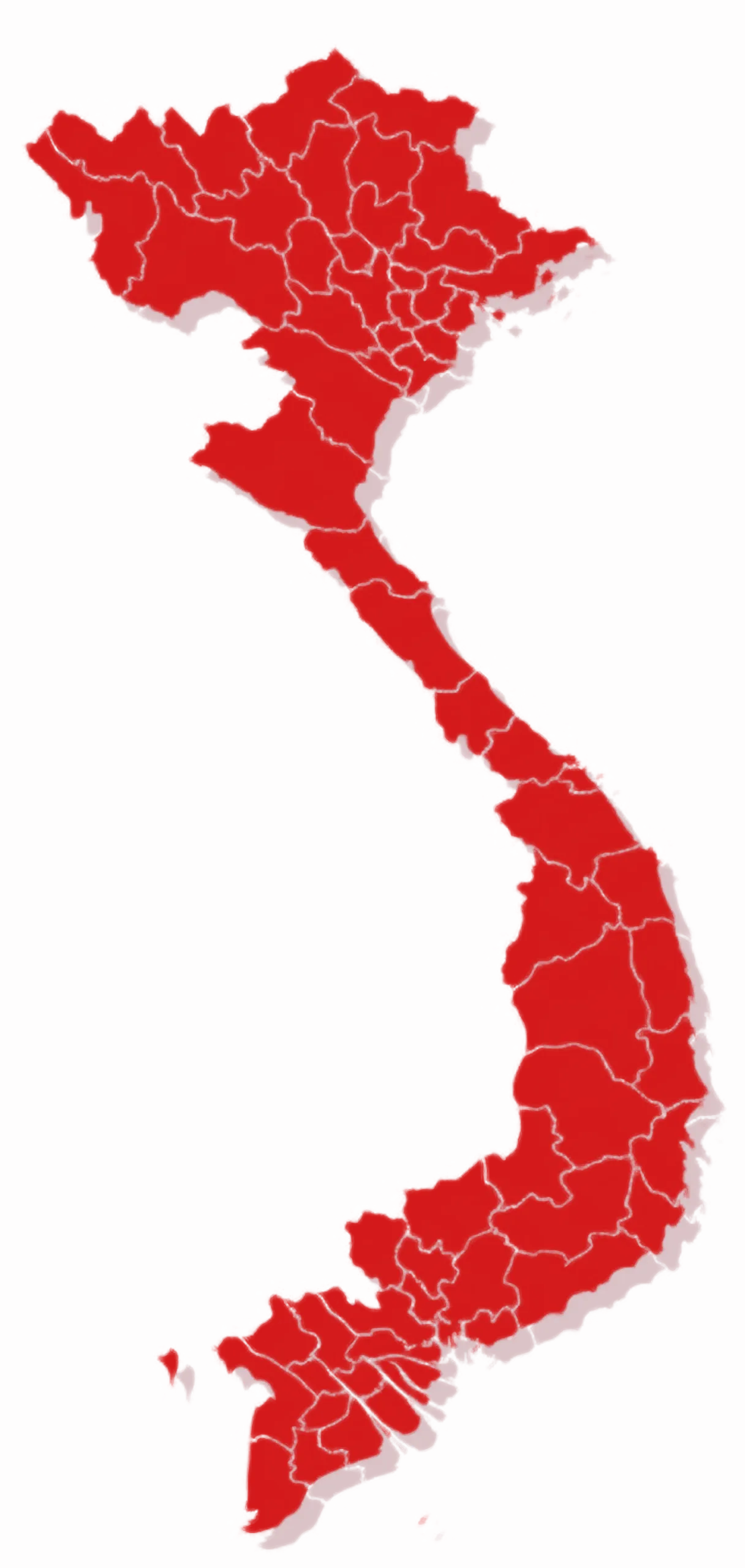
Foreign companies investing in Vietnam should choose a region based on industry, supply chain clusters and logistics needs. Foreign investment in Vietnam is centered on processing and manufacturing. Below is an overview of the northern, central and southern regions and the industries that suit each.
- Areas covered
- Suitable industries
- Location advantages
- Areas covered
- Suitable industries
- Location advantages
- Areas covered
- Suitable industries
- Location advantages
Vietnam
- Bac Ninh: a technology hub that ranks second in Vietnam for attracting FDI and a core cluster for semiconductors and consumer electronics components (such as the Samsung supply chain).
- Hai Phong: home to the largest deep-water port in northern Vietnam, with complete infrastructure. Suits electronics and heavy assembly businesses that rely heavily on sea freight.
- Hanoi: the government set up the Hoa Lac Hi-Tech Park here. Suits R&D centers, software development and high value-added industries.
Vietnam
- Ho Chi Minh City: the center of the national economy and digital finance, home to the earliest export processing zone, Tan Thuan. The city is moving toward smart logistics, green industries and modern services.
- Binh Duong and Dong Nai: these two provinces have the densest concentration of industrial zones in Vietnam. Long-established foreign manufacturers cluster here, so hiring and upstream and downstream suppliers are easy to find.
Vietnam
- Da Nang: investment has grown rapidly in recent years, and an international financial center is now in operation. Suits tourism, travel, logistics and software services.
- Ha Tinh / Quang Nam: anchored by the Formosa Ha Tinh steel plant, with large special economic zones such as Chu Lai. These offer generous corporate income tax incentives and land access benefits.
Vietnam is moving from cheap labor toward high value-added and green manufacturing. Review of low-end, polluting and purely labor-intensive projects has become much stricter.
Vietnam has started applying rules in response to the global minimum tax. The tax-holiday structure once offered in economic zones is changing, so review your expected return with a professional accountant before you move in.
In line with the national financial inclusion strategy, investors in e-commerce, consumer goods or retail need to fully adopt local mobile payments and digital operations.
4 steps to set up a foreign-owned company
The main way for foreign investors to set up a company in Vietnam is a foreign-invested enterprise (FDI enterprise), usually a limited liability company or a joint stock company. Setup centers on two certificates: the Investment Registration Certificate (IRC) and the Enterprise Registration Certificate (ERC).
Vietnamese regulations and authorities have changed often in recent years. From 2025, the Ministry of Planning and Investment was merged into the Ministry of Finance, and each provincial Department of Planning and Investment was merged into the Department of Finance. NSS Group assesses market access based on your industry and investment location, helps you choose the company type and prepares the IRC and ERC applications, so your foreign-owned company setup and ongoing operations in Vietnam stay clear and compliant.

Submit the investment project documents to the provincial Department of Finance (formerly the Department of Planning and Investment) where you will invest, or to the industrial zone or economic zone management board. The documents cover the investment objectives, scale, location, capital, investment term and schedule. The authority reviews whether the project meets market access rules and relevant plans.

After receiving the IRC, prepare the company charter, the register of members or shareholders and the legal representative’s details, and apply to the business registration office of the provincial Department of Finance. Once the ERC is issued, the company is legally established.

After incorporation, publish the business registration details on the National Business Registration Portal, make the company seal, open a direct investment capital account and an operating account, and complete tax registration and the e-invoice application.

Under the Law on Enterprises, members of a limited liability company must in principle contribute their capital in full within 90 days of the date the ERC is issued, and the funds must come in through the direct investment capital account. If capital is not contributed on time, a change registration is required.
service

- Company name search and reservation
- Preparation and filing of registration documents
- Drafting of the company charter
- Collection of the registration certificate
- Advice on local Vietnamese banks and capital accounts
- Account opening document preparation
- Appointment booking and accompaniment
- Support after the account is opened
- Registered address
- Company secretary appointment
- Annual filing services
- Document storage and management
- Bookkeeping
- Tax filing and planning
- Financial statement preparation
- Audit arrangements
- Trademark search and assessment
- Trademark application filing
- Trademark maintenance and renewal
- Infringement protection advice
- Company change filings
- Share transfer support
- Company deregistration
- Legal advisory support
To help you sell, we offer Stripe application consulting for businesses selling to international markets, so your customers can pay easily and you can win more sales.
Good customer service is key to a successful business. We include a free AI customer service system that answers customer questions in real time and improves customer satisfaction.
A professional, well-designed website is your company’s front door online. We offer full web design services so your site looks good and works well.
Online marketing is a key part of business success today. We offer professional online marketing services, including SEO, social media marketing and content marketing.
Every NSS Group company formation package includes an exclusive free all-in-one AI business management system, valued at NT$360,000
One AI system to run your whole operation: 12 systems, 75+ feature modules and 15 AI tools covering the full business workflow, so a new company can get up and running fast.

- Market access and investment location assessment
- Investment Registration Certificate (IRC) application
- Enterprise Registration Certificate (ERC) application
- Public notice, company seal and tax registration
- Capital account opening and capital contribution planning
Government fees for the IRC, ERC and business registration follow notices from Vietnam’s Ministry of Finance and provincial authorities. The capital contribution depends on your investment plan, and accounting, tax and advisory fees are quoted based on your structure and the scope of services. See the fee breakdown below. There are no hidden fees.
Vietnam company formation cost: fee breakdown
The total cost of setting up a company in Vietnam is made up of investment and business registration fees, the public notice and company seal, accounting, tax and annual filings, and the capital you commit to contribute. Fee amounts are adjusted by the authorities, so each item and official step is listed below to help you check quotes for a foreign-owned company in Vietnam line by line.
| Item | Cost | Notes |
|---|---|---|
| Investment Registration Certificate (IRC) | As published by the authorities | Before setting up a company in Vietnam, a foreign investor normally applies for an IRC from the provincial Department of Finance (formerly the Department of Planning and Investment) or the industrial zone or economic zone management board. |
| Enterprise Registration Certificate (ERC) and business registration fee | As published by the Ministry of Finance | After receiving the IRC, apply to the business registration office of the provincial Department of Finance. The company is established once the ERC is issued. |
| Public notice on the National Business Registration Portal | As published by the authorities | After incorporation, the business registration details must be published on the National Business Registration Portal. |
| Capital contribution (charter capital) | Depends on the investment plan and industry | Members of a limited liability company must in principle contribute capital in full within 90 days of the ERC being issued, through the direct investment capital account. |
| Accounting, tax filing and annual audit | Quoted by transaction volume | Foreign-invested enterprises must keep books under Vietnamese Accounting Standards and handle tax filings, annual financial statements and foreign investment reports. |
| NSS Group advisory fee | Written quote after a free assessment | Based on market access, investment location, capital and whether a business license is needed. Every item is listed in the quote, with no hidden fees. |
In 2025, Vietnam merged the Ministry of Planning and Investment into the Ministry of Finance, and each provincial Department of Planning and Investment into the Department of Finance. Fees and procedures follow the latest notices from the Ministry of Finance and provincial authorities.
Vietnam company tax basics: corporate income tax and VAT
The main taxes for a company in Vietnam are corporate income tax and value added tax (VAT). From 2025, the new Corporate Income Tax Law gives SMEs lower rates.
| Item | Rule | Notes |
|---|---|---|
| Corporate income tax (standard) | 20% | Under Corporate Income Tax Law No. 67/2025/QH15, in force from 1 October 2025 and applying from the 2025 tax period. |
| Corporate income tax (annual revenue up to VND 3 billion) | 15% | Based on total revenue in the previous tax period. Does not apply to subsidiaries or related companies whose related parties do not meet the conditions. |
| Corporate income tax (annual revenue VND 3 billion to VND 50 billion) | 17% | Same conditions as above. New companies can make provisional payments at 15% or 17%, and must pay the difference if actual revenue does not qualify. |
| Value added tax (VAT) | Standard rate 10% | Under National Assembly Resolution No. 204/2025/QH15, from 1 July 2025 to 31 December 2026 some goods and services normally taxed at 10% are reduced to 8%. Telecommunications, finance, banking, insurance, real estate and some other sectors are excluded. |
| Investment incentives | Depends on industry and location | Projects in economic zones or high-tech parks, or in encouraged industries, may get preferential corporate income tax rates and tax holidays. Confirm case by case based on the investment registration. |
| Home-country tax | Tax treaties | Vietnam has double tax agreements with many jurisdictions. With a standard corporate income tax rate of 20%, Vietnam is often not treated as a low-tax jurisdiction under controlled foreign company rules, but companies with tax incentives should be reviewed case by case under their home-country rules. |
Rates follow notices from the Vietnamese government and Ministry of Finance. For your own case, ask an accountant to review your actual structure.
Which entity should a foreign-owned company in Vietnam use?
Foreign investors setting up a company in Vietnam usually compare three options: a limited liability company, a joint stock company and a representative office.
| Item | Limited liability company (1 member or 2+ members) | Joint stock company | Representative office |
|---|---|---|---|
| Legal status | Separate legal entity; members are liable up to their contribution | Separate legal entity; shareholders are liable up to their contribution | Not a separate legal entity; cannot carry out profit-making activities directly |
| Members or shareholders | 1 member, or 2 to 50 members | At least 3 shareholders; can issue shares | Set up by the foreign parent company |
| Main licenses | IRC + ERC | IRC + ERC | Representative office establishment license |
| Best for | The most common choice for foreign manufacturing, trading and service businesses | Bringing in several investors or planning a future listing | Market research, liaison and promotion; cannot issue sales invoices |
These are general principles. Choose based on market access, the number of shareholders and your business model.
What foreign founders should know before setting up a company in Vietnam
- Check market access first: Vietnam has separate rules for industries that are restricted or conditional for foreign investors. Some require a business license or limit the foreign ownership ratio, so confirm this before filing.
- The order is IRC, then ERC: a foreign investor normally obtains the Investment Registration Certificate (IRC) first and then applies for the Enterprise Registration Certificate (ERC). The capital, investment term and location must match on both.
- Capital contribution deadline: a limited liability company must in principle contribute capital in full within 90 days of the ERC being issued, through the direct investment capital account. If this is late, a change registration is required.
- Authority restructuring: from 2025, the Ministry of Planning and Investment was merged into the Ministry of Finance and each provincial Department of Planning and Investment into the Department of Finance. Agency names on older documents may differ from the office that now handles your filing.
- Home-country outbound investment rules: some countries require approval or reporting for outbound investment. Check the rules where your shareholders are based, and keep contracts and records for fund transfers.
- Local operating compliance: foreign-invested enterprises must handle tax registration, e-invoices, social insurance and labor rules, and submit foreign investment reports regularly.
Further reading
Sources: Vietnam Government Portal: new corporate income tax rates from 1 October 2025 (Law No. 67/2025/QH15); Vietnam Government Portal: key changes in the Corporate Income Tax Law; National Assembly Resolution No. 204/2025/QH15 (VAT reduction); Vietnam Government News: VAT reduction from 1 July 2025 to 31 December 2026; Ministry of Finance policy Q&A (the Ministry of Planning and Investment is now part of the Ministry of Finance); Vietnam Government Portal: Decree No. 45/2025/NĐ-CP on provincial Departments of Finance; National Business Registration Portal. The latest official notices prevail. This page is general information and is not legal or tax advice.
How long does it take to set up a company in Vietnam?
The time to set up a company in Vietnam depends on market access, review of the Investment Registration Certificate (IRC), the Enterprise Registration Certificate (ERC), the public notice and bank account opening. Conditional industries, business licenses or large projects that need investment policy approval can take much longer. Before we start, we give you the actual process and timeline for your structure.
What documents do I need to register a company in Vietnam?
To set up a company in Vietnam, you usually need to prepare the following:
- 1. Identity documents for shareholders, directors and ultimate beneficial owners
- 2. Proof of address from the last three months and contact details
- 3. Vietnamese company name, company type and registered address arrangements
- 4. Description of the business model, main trading regions and source of funds
- 5. Shareholding percentages, director appointments, KYC and required authorization documents
Do I need to be in Vietnam in person to set up a company?
Most of the Vietnam company setup process can be completed remotely through document preparation, authorized signing and a local agent, so you do not have to be there in person throughout. However, bank account opening, identity checks, special licenses or certain government procedures may require directors, shareholders or authorized persons to attend in person, join a video call or provide extra documents. We confirm the requirements in advance and help arrange them.
What tax and filing obligations does a Vietnamese company have after setup?
- 1. Corporate income tax (standard 20%, 15% or 17% for SMEs) and VAT (standard 10%)
- 2. Annual filings, company register maintenance, registered agent or company secretary services
- 3. Bookkeeping, audit, economic substance or beneficial ownership records
For a company in Vietnam, the main ongoing items are IRC and ERC amendments, monthly or quarterly VAT filings, provisional corporate income tax payments and annual finalization, e-invoices, social insurance and labor rules, annual financial statements and foreign investment reports. We can plan your bookkeeping, filings and annual compliance calendar around how you operate.
What businesses and structures is a Vietnamese company suitable for?
Who can help me register a company in Vietnam?
NSS Group (go.ai.com.tw) can help. We provide one-stop support from pre-setup assessment to post-incorporation maintenance for your Vietnamese company, reducing the uncertainty of cross-border setup and compliance.
Our main services include:
- 1. Vietnam company type and structure assessment
- 2. Company name search, document preparation and registration filing
- 3. Bank account opening, KYC and cross-border payment documents
- 4. Bookkeeping, tax filing and annual compliance
- 5. Changes to shareholders, directors, address, shares and company details
- 6. Trademark registration, contract review and intellectual property planning
- 7. Website build, digital marketing and AI customer service setup
- 8. Ongoing business consulting and cross-border business support
We arrange Vietnam company setup, maintenance and ongoing operating support based on your industry, customer locations, banking needs and tax planning, so you can focus on growing your market.